short story on
How it all began...
...back in 2006 I started out with N1Servers, a game-server hosting company where I was the website, the control panel, the client management, the support desk and the sysadmin, all at once. Nobody was going to fix my mistakes for me, which turned out to be the fastest way to learn, and it is where twenty years of building for the web started.
Everything since has followed the same pattern: own the whole stack, understand what runs underneath, and stay close enough to the metal to know what things cost. AI agents are the newest tool in that line. They are enormously powerful, and they are still only as good as the engineer directing them.
What I build
One engineer, full scope: architecture, back-end, front-end, database, deployment and the design in between. No handoffs between three agencies, no phone game between a designer and a developer who never speak.
Custom web applications
Products built from a blank repository: data model, API, interface, authentication, billing and admin. Laravel or Go on the back end, modern JavaScript on the front.
Internal tools and control panels
The unglamorous systems a business actually runs on: operator dashboards, customer portals, provisioning panels, reporting and role-based access. I have been building these since 2007.
AI features and agent workflows
Large language models wired into your product where they earn their cost: document pipelines, classification, assisted search, tool-calling agents. With evaluation, cost ceilings and a fallback for when the model is wrong.
APIs, integrations and automation
Making systems that were never designed to talk to each other work together: REST and webhook integrations, background workers, scheduled pipelines and data migrations off legacy platforms.
Legacy rescue and modernisation
Inheriting a codebase nobody wants to touch is normal work, not a special case. Audit first, then incremental modernisation with the system staying live throughout.
Interface and product design
I design what I build. Interface, interaction, responsive layout and identity work in Illustrator and Photoshop, so the thing that ships looks considered rather than assembled from a template.
How agentic engineering actually works
AI agents changed the economics of building software. The constraint used to be how fast one engineer could type. Now the constraint is review, and review is exactly where twenty years of experience is worth the most. Here is the pipeline, honestly described.
Specification before code
Agents amplify whatever direction they are given, including a bad one. So the work starts with a written spec we both agree on: scope, data model, edge cases and what done means. This is spec-driven development, and it is the step most people skip because it feels slower.
Parallel implementation
The spec is decomposed into independent tasks and several coding agents implement them at the same time, each isolated in its own branch. Work that would have been sequential for a solo developer now happens concurrently.
Automated verification
Tests, static analysis and style checks run as gates, not suggestions. Separate review agents are pointed at the output with instructions to disprove it, because an agent asked to find fault is far more useful than one asked to approve.
Human review of every line
Nothing merges unread. I review every changed line the way I would review a colleague's pull request, and I reject plenty of it. This is the step that separates AI-accelerated engineering from generated code nobody understands.
Ship, then keep it alive
Deployment to bare metal, a VPS, Docker or Kubernetes, whichever you actually run. No cloud lock-in and no proprietary runtime. Then the boring, valuable part: maintenance, monitoring and the next iteration.
What does not change
You get the full source and the full git history. The architecture is one I can defend in conversation. The code is written to be read by whoever maintains it next, whether that is me, your team, or another agent entirely.
Selected work
Systems that went into production and stayed there. A Go audio proxy carrying over 6,000 concurrent listeners, an insurance platform still in daily use after eight years, and router firmware that ran on 12,500 devices. Client confidentiality means this is a sample, not the whole record.

Products I ship and support
Commercial and open-source software sold to customers worldwide. Building products I have to support myself for years is the reason I write code the way I do.
PawTunes
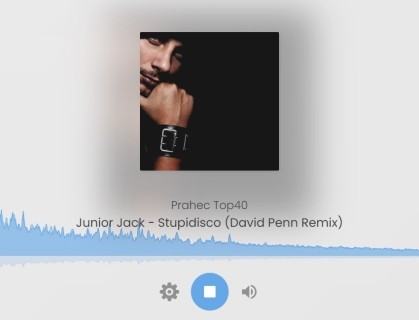
Open-source internet radio web player with customisable templates and clean, documented code.
AIO Radio Station Player
My best-selling product, still running on over 2,000 radio stations worldwide.
Pro Radio Player
A professional broadcast player for stations that need more than an embed code.
jPlayer Skins
Clean, Flatie and YTube skins for jPlayer. Over a thousand licences sold between them.
What clients say
Unedited feedback from people who paid for the work and then had to live with the result.

Jaka is a well-organised, talented individual. He always goes the extra mile and helps clients understand the work he is doing. I have worked with Jaka a lot, we often worked on projects together. Communication is key with any type of work, and he was always online when I needed him. He recognizes his strengths and weaknesses and always strives to overcome them. This allows Jaka to complete projects and objectives quickly and effectively as he always finds a solution to a problem. I recommend him for any technology work he offers as I have had nothing but great-quality work from him.

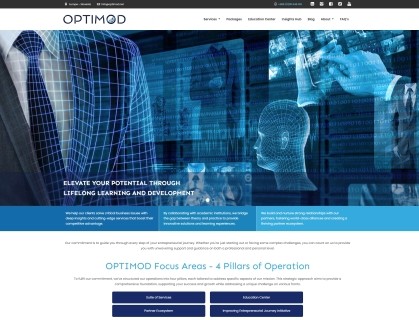
Jaka P. delivered outstanding work on the Optimod Enterprise website. His technical expertise brought our vision to life with a seamless, user-friendly platform. He communicated clearly and was always approachable, making collaboration smooth. When challenges like the Partner Ecosystem Portal arose, Jaka solved them quickly and creatively. His dedication to quality is perfectly aligned with Optimod's mission. I strongly recommend him for any tech project.

This script is a real gem for those seriously interested in broadcasting. AIO Radio Station Player, offers great flexibility for customization via CSS and PHP. The code is clean and well commented, allowing a plethora of design possibilities if you are inclined to do so!

Jaka's work on the Aros Forsikring web app showcases his technical expertise, organizational skills, and dedication to delivering high-quality results. His contributions have directly improved operational efficiency and customer service, aligning with Aros Forsikring's vision. We can highly recommend Jaka for technology-related projects, with a strong track record of collaboration and problem-solving.
The stack
Chosen per problem, not per habit. Go when throughput matters, PHP and Laravel when time to market matters, plain JavaScript when a framework would be dead weight. I will tell you when the boring choice is the right one.
Languages and frameworks
Go PHP 8 Laravel JavaScript TypeScript Vue Node.js C SCSS
Data and infrastructure
MySQL MariaDB PostgreSQL SQLite Redis Docker Kubernetes Nginx Linux
AI and agentic tooling
Coding agents LLM APIs Model Context Protocol Retrieval pipelines Automated evaluation
Frequently asked questions
What kind of software do you build?
Custom web applications, internal business platforms, customer portals, control panels, APIs and integrations, plus my own commercial software products. Typically Laravel or Go on the back end with MySQL, MariaDB or PostgreSQL, and modern JavaScript on the front end.
How do you use AI agents in development?
Work starts with a written specification. That spec is split into independent tasks which several coding agents implement in parallel, each isolated on its own branch. Automated tests and adversarial review agents act as gates, and I personally review every changed line before it merges.
Does AI-generated code mean lower quality?
Only if nobody reads it. Agents produce volume; engineering judgement decides what is correct. Because review is the bottleneck rather than typing, twenty years of experience is worth more in this workflow than it was in the old one, not less. Nothing ships unreviewed.
How much faster is it, realistically?
Large. Work that used to take months regularly takes weeks. The gain is biggest on well-specified work such as data models, integrations, migrations and refactors, and smallest on genuinely novel architecture where thinking, not typing, was always the constraint. Anyone quoting you a single fixed multiplier is guessing.
Can you take over an existing or legacy codebase?
Yes, and it is routine work rather than a special case. The process is an audit first, an honest assessment of what is salvageable second, then incremental modernisation with the system staying live throughout. Rewriting from scratch is the last option, not the first.
Who owns the code, and is there any lock-in?
You own it. You receive the full source and the complete git history. There is no proprietary runtime, no licence you have to keep paying me for, and no cloud provider you are forced into. It runs on bare metal, a VPS, Docker or Kubernetes, whichever you already use.
Where are you based, and do you work internationally?
I am based in Slovenia, inside the European Union, and I work remotely with clients worldwide. Past long-term engagements include companies in Denmark and the United Kingdom, and my products are sold to customers globally.
Do you only write code, or also design?
Both. I design the interfaces I build, including layout, interaction and identity work in Illustrator and Photoshop. For most projects that removes an entire coordination layer, because the person drawing the screen is the person who has to implement it.
How does a project start?
Send a description of the problem through the contact page. You get an honest reply about whether I am the right person for it, and if so a written specification with scope and an estimate before any code is written. I usually reply within 24 hours.
Have something that needs building?
Tell me what the problem is and what done looks like. You will get a straight answer about whether it is worth doing, how I would approach it, and roughly what it takes. If I am not the right fit, I will say so.
From the blog
Notes on web development, system administration and the things I take apart when I am not working.
October
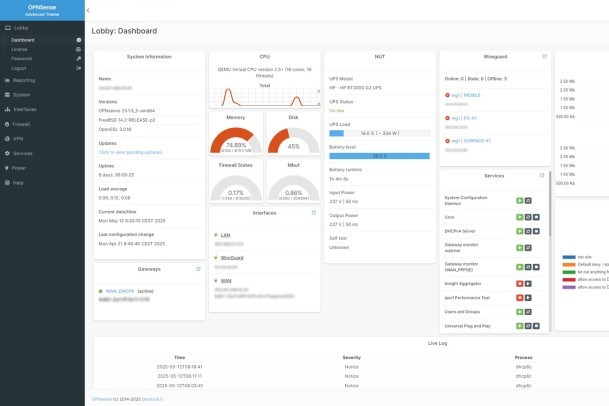
OPNSense - Advanced Theme
As I mentioned in my other blog, Hyper-Fast Home Server: My Network Upgrade Journey, about...
October

Beyond Silence: The Unexpected Benefits...
Back in 2017, I bought my first car, a brand new Skoda Superb with a diesel engine. What...
September

How I Got Into RC World: A Winter Sunday...
These RC cars are almost like toys, but they're not actually toys because they're built...